Shopping note: retailer links in this guide are ordinary direct links. If a link becomes an affiliate link, it will be identified and we may earn a commission. Read our disclosure.
The entryway has a demanding brief for such a small part of the home. It receives shopping bags, wet shoes, post and everything that gets put down when someone arrives tired. A considered setup begins with those habits, rather than an empty console styled with objects that have nowhere else to go.
Whether you have a hallway or a corner beside the front door, organize the space around arriving and leaving. The aim is a clear route and a few reliable homes for daily essentials. A useful entryway can be made from existing furniture before any new purchase is necessary.
Observe what lands there for a week
Make a short list of the objects that collect near the door. Separate everyday items from things merely waiting to go elsewhere. Keys need a repeatable home; a parcel awaiting return needs a temporary place and a next step. Treating both as permanent display objects can leave even a generous console looking crowded.
Consider everyone who uses the entrance, including children or visitors whose reach and storage needs may differ. Identify the point where bags are dropped and where shoes are removed. A basket across the room may look neat but be ignored if it is inconvenient. Move an existing tray or chair into position and try the arrangement before choosing something new.
Measure the door and the walking route
Measure the available wall and the space used by the door as it opens. Include handles, skirting boards and nearby cupboard doors. Mark a proposed piece of furniture on the floor with removable tape, then walk past carrying a full shopping bag. A slim console can still obstruct movement when it sits at a turning point.
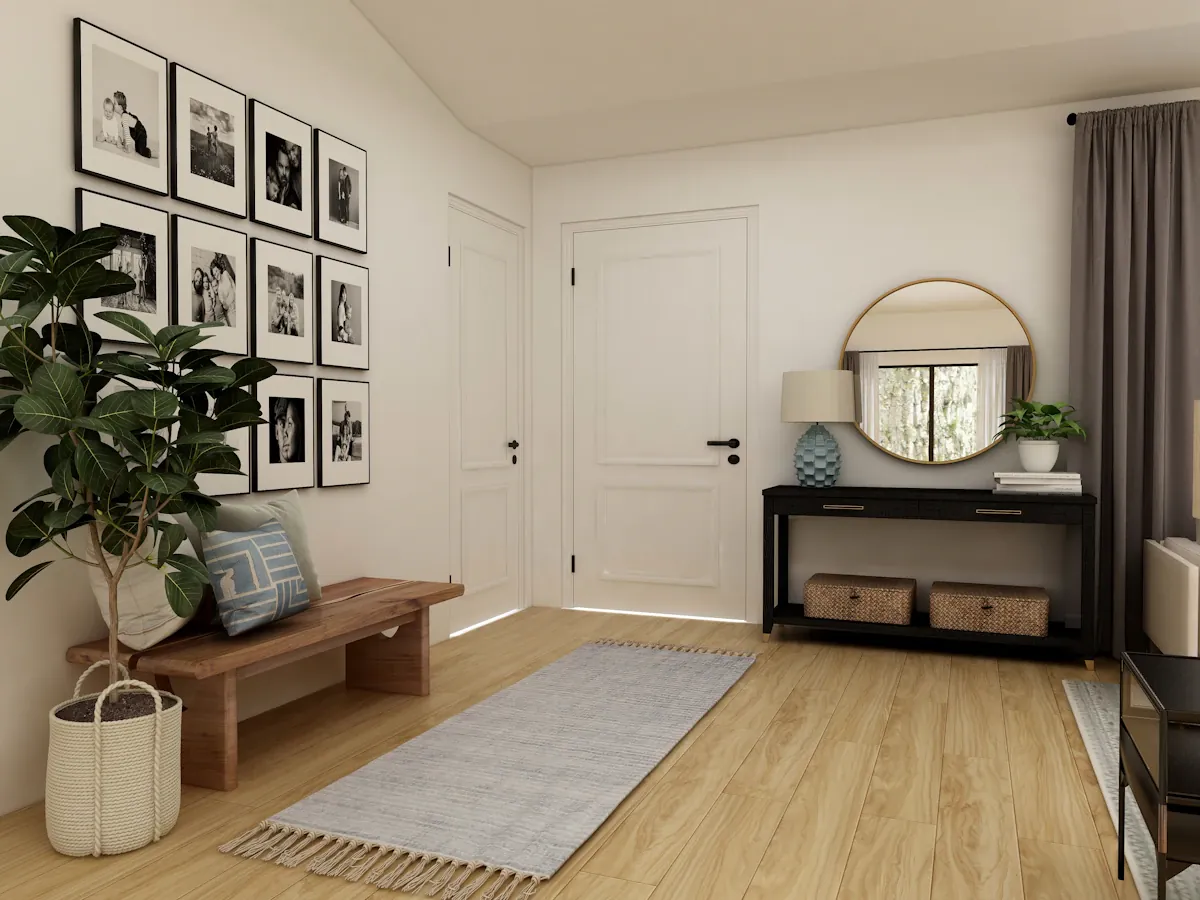
If a bench is on the list, check its seat height and depth against how you will use it. Try a similarly sized seat before ordering. Storage beneath it is helpful only if shoes and baskets can be reached without blocking the passage. Follow the manufacturer’s assembly and anchoring instructions for any furniture you buy, especially taller or easily tipped pieces.
Give keys and small items a shallow home
A tray or small bowl can contain keys and everyday loose items without creating a hidden drawer full of miscellaneous objects. Choose a surface that suits the items being placed on it and will not be easily knocked into the doorway. If you carry several sets of keys, leave enough room to identify them without lifting everything out.
A mirror may be useful for a final check before leaving, but its size should relate to the wall and the viewing position. Check mounting requirements before purchase and installation. Skip a decorative mirror that crowds the only practical surface if you rarely use one there. Utility and appearance can share the space without every object doing both jobs.
Limit the everyday shoe collection
Choose a manageable group of shoes for the entrance and store less frequently worn pairs elsewhere. Count the actual shoes rather than estimating from pairs shown in a product photograph. Boots, larger sizes and broad soles need different spaces. Closed storage can create a calmer view, while open shelves offer quicker access and make it easier to notice what has accumulated.
Allow wet footwear to dry appropriately before putting it into enclosed storage. Check care guidance for the material, and choose a tray or mat suited to the floor beneath it. Washable or wipeable surfaces can simplify maintenance, but inspect the product instructions rather than assuming water will be harmless. Skip delicate baskets where muddy shoes are the main reality.
Add the finishing layer only after the routine works
Once daily items have homes, decide whether the area needs a lamp, an artwork or a small decorative object. One deliberate detail may be enough. Keep any trailing cable out of the walking route and use lighting in accordance with the manufacturer’s guidance. A clear surface is also a valid finish when the entrance is particularly tight.
Buy the piece that solves the largest remaining inconvenience. That might be a hook appropriate for the wall and bag weight, or a better-sized shoe tray. Skip a matching furniture set if only one component fits. Revisit the arrangement after a few weeks and move anything that repeatedly ends up elsewhere. A successful entryway supports the household’s habits instead of demanding perfect discipline every evening.
BROWSE WITH A PLAN
Where to begin your search
Use the checks above when comparing current assortments at Nordstrom, IKEA, MUJI. These links go to retailer websites; they are starting points for your own comparison, rather than endorsements of every item.
Before ordering, confirm the current composition, measurements, care instructions, delivery cost and return conditions for the exact item. Availability and terms can change.
Your questions, considered
What if there is no hallway?
Use a small area beside the door for the most frequently needed items, keeping the route clear. A shallow tray and one suitable hook may serve better than a piece of hallway furniture squeezed into a living room.
Should bags hang from hooks or sit on a shelf?
Choose according to the bag, its usual contents and the available mounting surface. Follow load and installation guidance, and avoid hanging a bag in a way that distorts its handles.
Our approach: practical editorial guidance, without claims of hands-on product testing. How we make recommendations.