Shopping note: retailer links in this guide are ordinary direct links. If a link becomes an affiliate link, it will be identified and we may earn a commission. Read our disclosure.
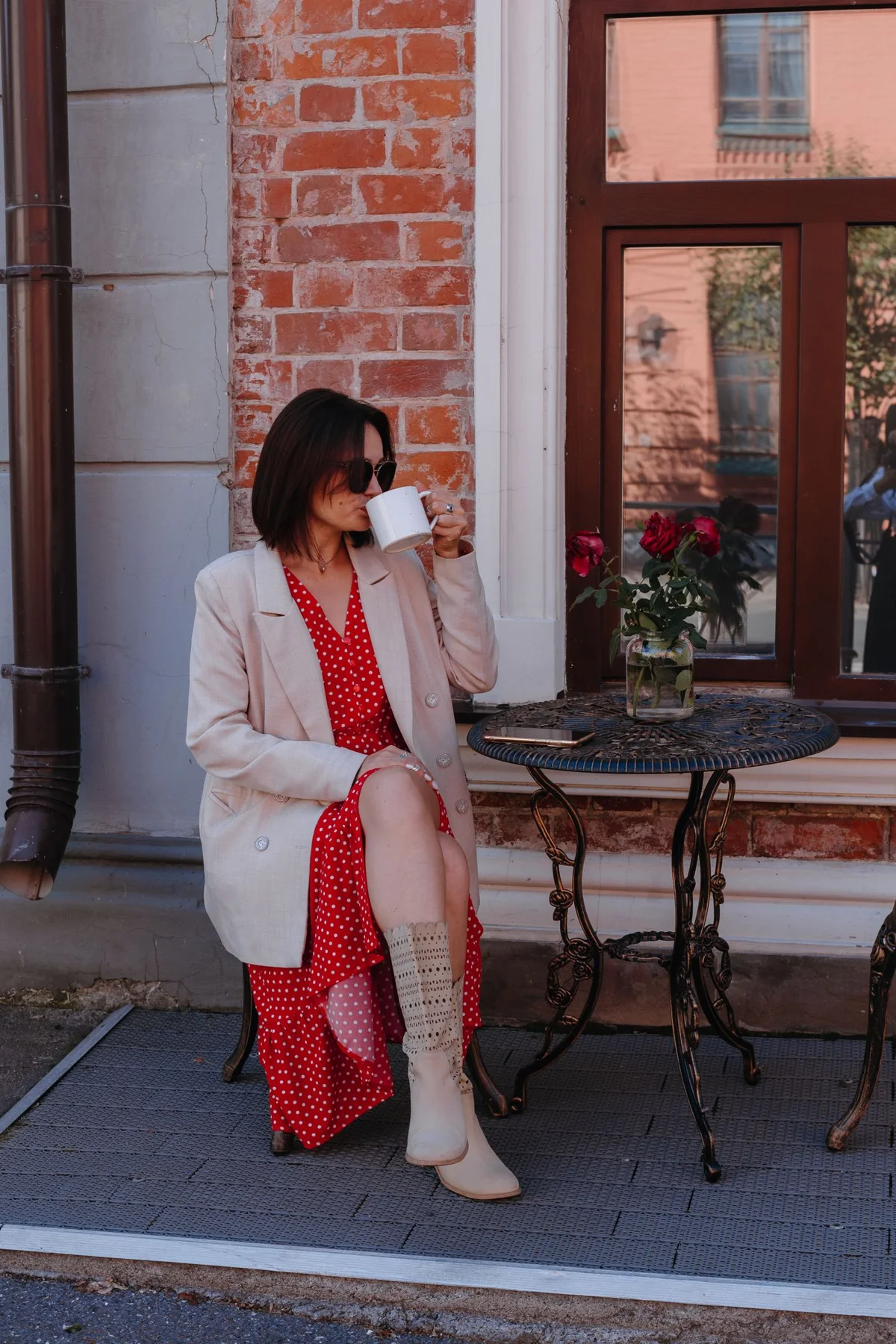
A red base outfit can make a pale jacket feel like a useful contrast rather than an unrelated extra piece. Begin with garments already owned and compare the whole group. The question is how much red you want visible and whether the outfit serves the day, not whether a campaign image has supplied the only acceptable proportion. A familiar layer can offer more than one version without another purchase.
Build the red outfit first
Choose the red garment or combination you genuinely intend to wear. Add suitable shoes and review the base independently. A pale jacket should not have to remain closed throughout the day to conceal a waistband or neckline decision still unresolved beneath it.
Look at the group from an ordinary distance in suitable light. If two red pieces are involved, decide whether you enjoy their relationship rather than assuming similar colour names make them identical. Keep material and care questions with their own product information.
Add the pale layer open
Start with the layer in a supported open arrangement. Notice how its fronts frame the red area. A broader opening may make the base more prominent, while a narrower one leaves the pale garment with a larger visual role.
Keep your hands out of the composition after the initial dressing adjustment. If the fronts need to be held apart for the version you like, that tells you something useful about the pairing. The outfit needs an understood arrangement beyond the mirror pose.
Compare another intended version
If the garment supports closing, compare that version without changing the base or shoes. The pale area may become the main visible shape while red appears at the opening or lower edge. You can prefer different versions for different parts of a day.
Sit and stand gently in a comfortable space. Observe whether either arrangement remains manageable after the transition. A quiet colour balance is not much help if you keep reconstructing the clothing whenever you move.
Keep other accessories simple by choice
Try the bag that serves the day's real belongings within its guidance. It does not need to be red or pale solely to explain the outfit. A familiar darker or quieter option can retain its practical role while the clothing supplies the colour relationship.
If you want another visible detail, start with an owned item and change one thing at a time. This makes the preference clearer than adding a matching bag, jewellery and shoes together and then assuming all were needed.
Remember the full day version
Remove the layer if it will come off indoors and confirm the red base still has a role you enjoy. Give the outer garment an appropriate temporary place and keep the carrying sequence manageable.
Record the two pieces and preferred opening if the pairing helps. A specific colour comparison can make existing garments easier to repeat without turning a red-and-pale image into a complete shopping list or a rule for every red outfit.
Related reading
One Outfit for Coffee, Wandering and Dinner, Choose a Transitional Coat for the Layers Beneath It.
Our approach: practical editorial guidance, without claims of hands-on product testing. How we make recommendations.





