Shopping note: retailer links in this guide are ordinary direct links. If a link becomes an affiliate link, it will be identified and we may earn a commission. Read our disclosure.
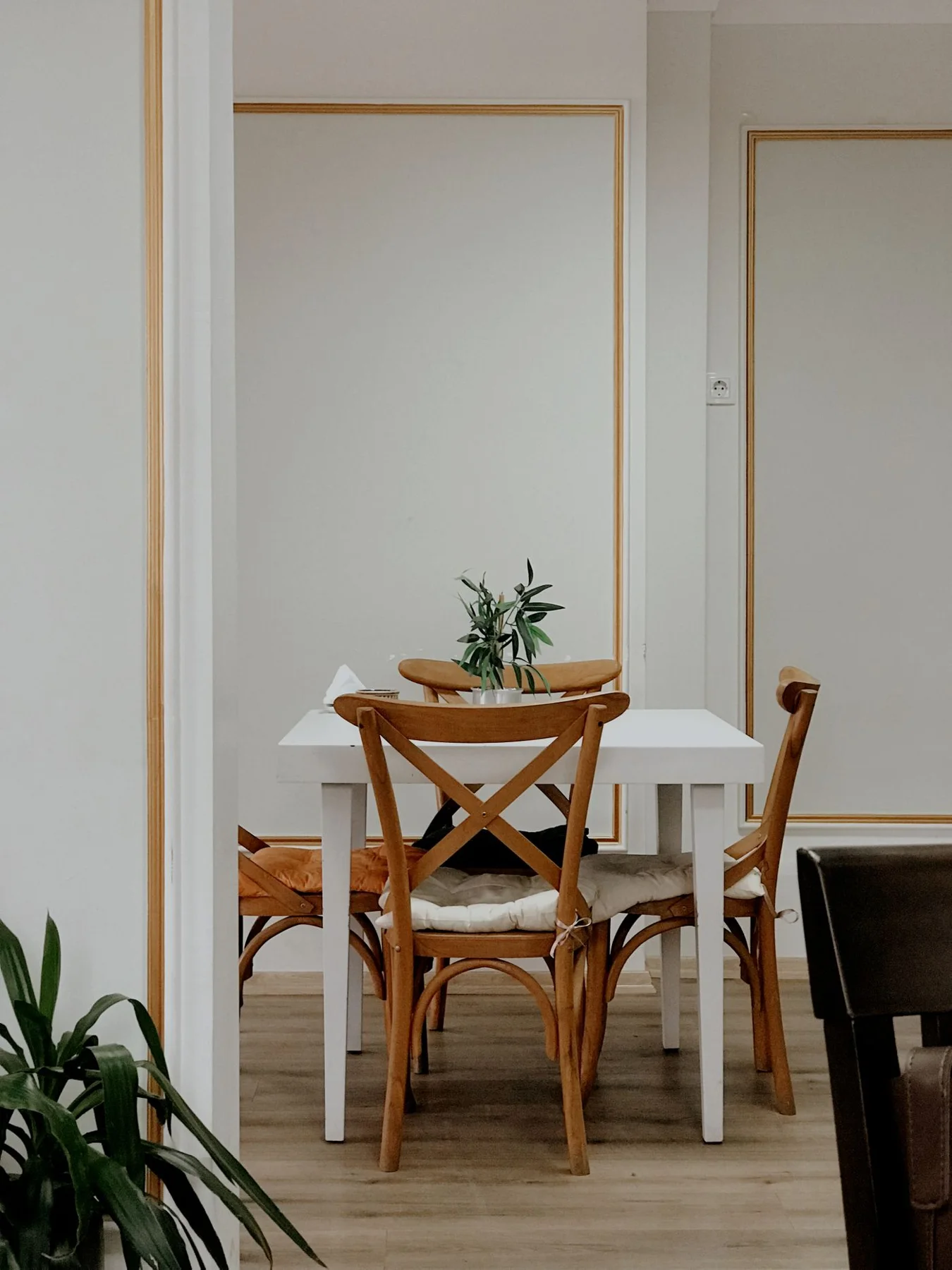
A dining arrangement can appear spacious with chairs tucked away and feel crowded as soon as people sit down. Test the occupied room before adding another seat. Table legs, chair arms and standing space all contribute to comfort. The useful layout lets people eat and move naturally, rather than providing the maximum number of places that can be fitted around the tabletop's outline.
Measure the usable openings
Look beneath the table and record the gaps between legs and any apron. Compare chair width, arm height and knee space. Overall outside dimensions do not describe every practical position. A chair that stores neatly may still keep its user too far from the edge. Include a cushion only if it will genuinely be used, because it changes the seated height and clearance.
Set a normal place
Use everyday plates and glasses and sit at each proposed position. Notice elbow room, comfortable reach and the ease of standing. End seats and side seats may behave differently. A decorative occasional chair is not automatically suitable for dining. Assess the actual use rather than assuming a matching finish makes it compatible with the table.
Walk behind the occupied seat
Check the route while someone sits, then while the chair is pulled out. Include doors, drawers and nearby furniture. Keep necessary access clear and consider different users' needs. If the layout works only when nobody moves until the meal ends, choose fewer places or another suitable arrangement. A comfortable smaller group can make hosting easier than a full table with no practical route around it.
Inspect condition and movement
Check stability and intended use and seek competent repair advice for uncertain joints. Cosmetic refinishing does not resolve structural issues. Follow loading and care guidance and use suitable floor protection where appropriate. Consider how manageable the chair is for its regular user. Heavy and light designs each need to be assessed as actual objects, not judged only by visual substance.
Leave tabletop space available
A large permanent centrepiece can reduce room for meals and shared dishes. Try a modest removable object or a clear surface. Give bags and other temporary items another destination if they repeatedly occupy the seats. The dining arrangement should be ready for ordinary use without a clearing project. Decoration can accompany that function without determining every available gap.
Should spare chairs stay nearby?
Only when a suitable location preserves daily movement. Fold or stack solely as designed and store safely. Identify that place before buying extras. The successful setup gives each person a comfortable usable seat and keeps the room practical between gatherings, allowing the table to serve everyday life rather than making the whole room work around occasional maximum capacity.
Related reading
A Relaxed Dinner Table Built from Everyday Pieces, Make a Reading Corner You Will Actually Use.
Our approach: practical editorial guidance, without claims of hands-on product testing. How we make recommendations.





