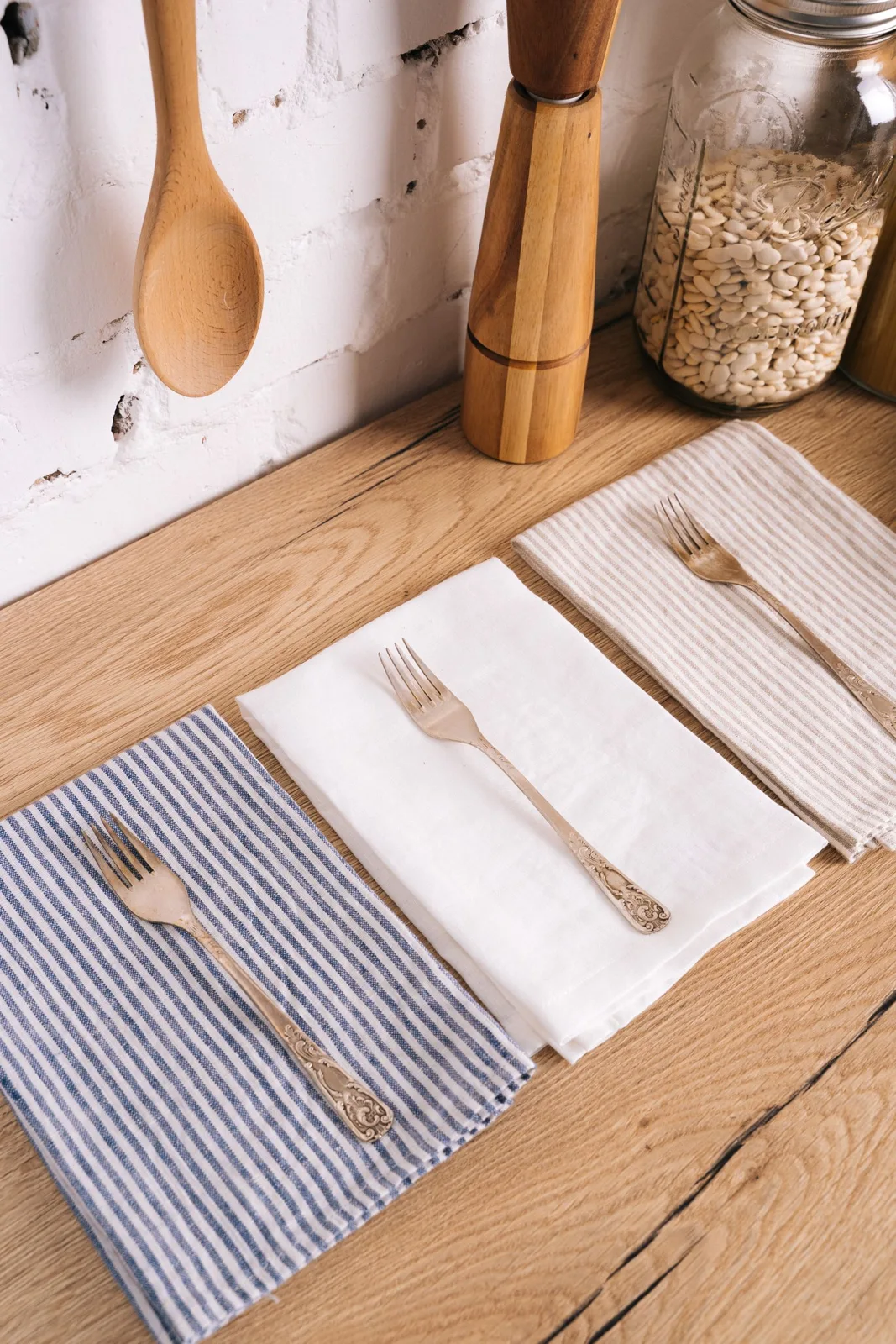
Shopping note: retailer links in this guide are ordinary direct links. If a link becomes an affiliate link, it will be identified and we may earn a commission. Read our disclosure.
Cloth napkins can be a simple part of ordinary meals rather than a formal hosting project. Choose them around feel, size and the care routine you are willing to maintain. A practical supply does not need a matching ring or elaborate fold. The useful arrangement makes a clean napkin easy to set out and return through laundering, without filling a drawer with decorative pieces reserved for an imagined perfect dinner.
Check dimensions in use
Read the actual measurements and try the intended fold beside a normal plate and glass. Product names and tightly folded images can hide scale. A large piece may occupy more display space than a small table can spare, while another size suits a different preference. Choose for the task rather than assuming the most generous fabric quantity is automatically best.
Read fabric and care information
Where possible, assess a sample's feel and check washing and drying guidance. Do not assume every linen-looking textile behaves alike. A crisp appearance may need pressing that a more relaxed finish does not. Decide what you will realistically do between meals. Decorative trim can be enjoyable but should not make the napkin awkward for its main role or require care that keeps the set unused.
Count ordinary use
Consider household size and the routine between laundering rather than buying only for the largest possible gathering. Keep a suitable clean amount accessible and store spares appropriately. Follow relevant care and hygiene guidance for actual use. Clean storage should remain distinct from textiles awaiting laundering. A decorative basket cannot replace that distinction merely by keeping the table clear.
Keep the place setting manageable
A simple fold beside the plate can be complete. Rings, ribbons and intricate shapes are optional and add objects to store. Preserve room for food, glasses and comfortable elbows. A small table can feel considered through clear useful settings rather than layers of decoration. If the napkin's presentation delays an ordinary meal, simplify the arrangement instead of reserving the set indefinitely for special occasions.
Make the return routine clear
Use a suitable place for used pieces and follow their care instructions. Ensure they are ready before returning to clean storage. Leave enough drawer or shelf space to remove one without disturbing the entire group. A highly precise folding arrangement may be less practical than a simple accessible stack. The storage should make repeated use easier rather than reward only the person willing to maintain a display.
Must the set match the tablecloth?
No. A quiet contrast or a small mix can be intentional. Exact coordination is not required for a clean useful napkin. Review what is actually used before buying more. The successful everyday set suits the table and laundering schedule, remaining accessible through ordinary meals. Its value comes from repeated comfortable use rather than the completeness of a coordinated dining collection.
Related reading
A Relaxed Dinner Table Built from Everyday Pieces, Everyday Glasses for a Small Kitchen Cupboard.
Our approach: practical editorial guidance, without claims of hands-on product testing. How we make recommendations.





