Shopping note: retailer links in this guide are ordinary direct links. If a link becomes an affiliate link, it will be identified and we may earn a commission. Read our disclosure.
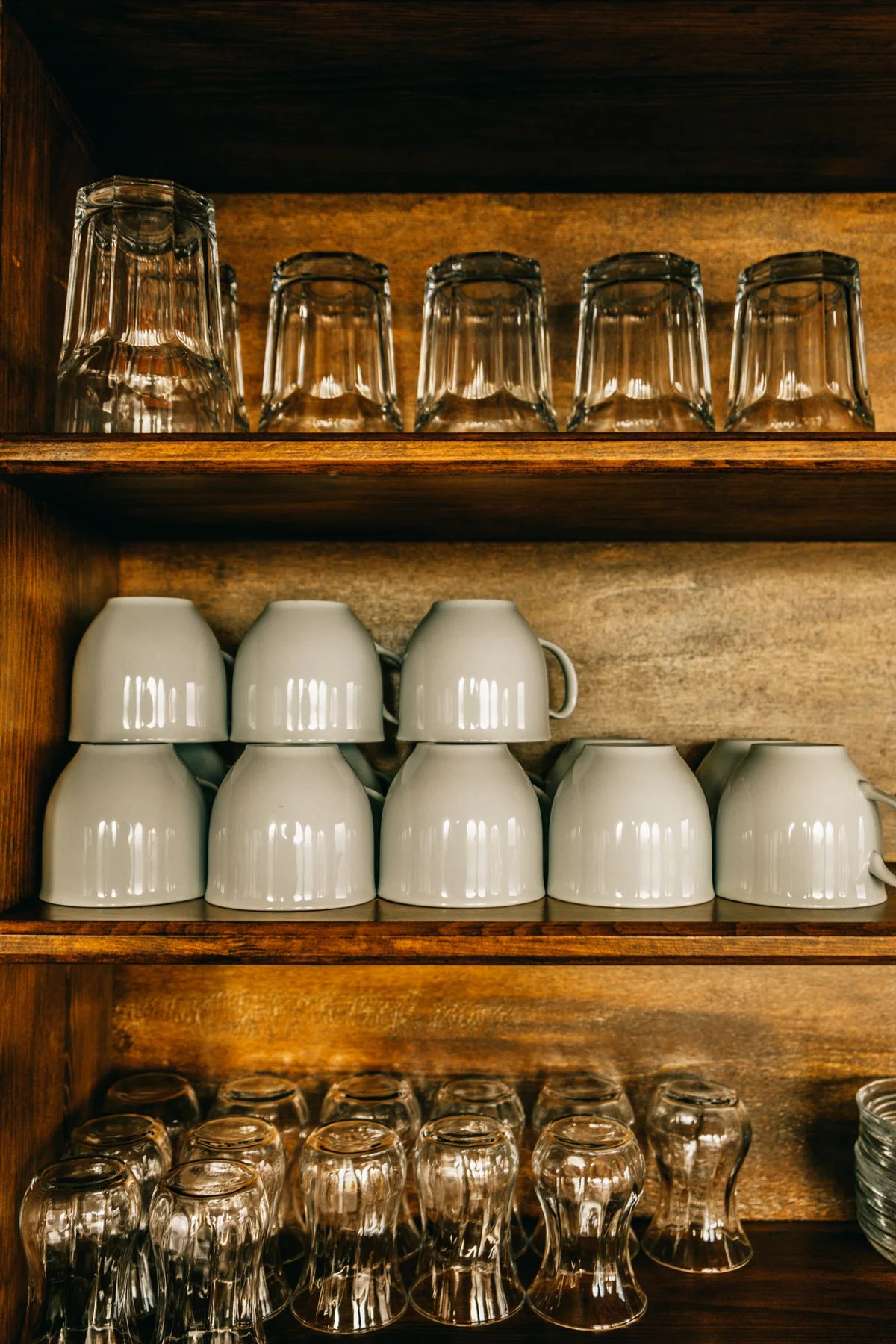
Everyday drinking glasses should fit the cupboard, washing routine and hands that use them. A large coordinated set can look good online yet leave little usable shelf space. Start with the number needed between normal washing cycles and the drinks actually served. The useful collection does not have to cover every imagined gathering; occasional needs can have a separate sensible plan.
Count the active requirement
Look at ordinary household use and how often clean glasses return to storage. Separate that from a rare larger event. A small practical group may be enough, with suitable borrowing or another arrangement for occasional hosting. Avoid buying more simply because a bundle offers a lower per-glass calculation. Unused pieces still require storage and handling.
Measure usable cupboard space
Record shelf height, depth and the opening, including any hinge or frame obstruction. Check how the glass is removed, not just whether it fits standing inside. Stacking can save space only when the product is intended for it and can be handled safely. Tall or wide shapes may crowd neighbours even if their individual dimensions appear suitable.
Hold and use the actual shape
Where a permitted trial is possible, check grip and comfortable weight. A very wide or heavy glass may not suit everyone in the household. Consider how it feels with a drink, while following safe handling and retailer rules. Appearance does not establish ease of use. A simple shape that is comfortable and straightforward to wash can be more useful than a dramatic one chosen for a table photograph.
Read cleaning and temperature guidance
Check dishwasher and other use instructions for each product. A decorative finish or delicate construction may require different handling from a robust everyday item. Do not assume all clear glassware tolerates the same conditions. If hand washing is required, consider whether that routine is realistic before choosing a large set intended for frequent use.
Inspect rims and storage contact
Check new or secondhand pieces for chips and damage before use. Discard damaged glassware safely rather than keeping it in ordinary rotation. If rims repeatedly chip, inspect cupboard access and any stacking arrangement before buying replacements. The cause may be crowded storage or handling, not simply bad luck with one glass. A slightly smaller active set can improve retrieval and reduce collisions.
Do everyday glasses need to match?
Matching can give a quiet table, but a mixed useful collection can work too. Repeat a shape, scale or simple colour where you want continuity and keep the setting functional. Follow material-specific care and local disposal guidance. A good small-kitchen decision leaves room to remove, wash and return each glass easily, with enough suitable pieces for real life rather than a cupboard filled for an event that rarely happens.
Related reading
Continue with A Relaxed Dinner Table Built from Everyday Pieces and An Everyday Bag Guide That Starts With What You Carry. These existing guides provide a broader starting point for the related wardrobe, home or planning decision.
Our approach: practical editorial guidance, without claims of hands-on product testing. How we make recommendations.





