Shopping note: retailer links in this guide are ordinary direct links. If a link becomes an affiliate link, it will be identified and we may earn a commission. Read our disclosure.
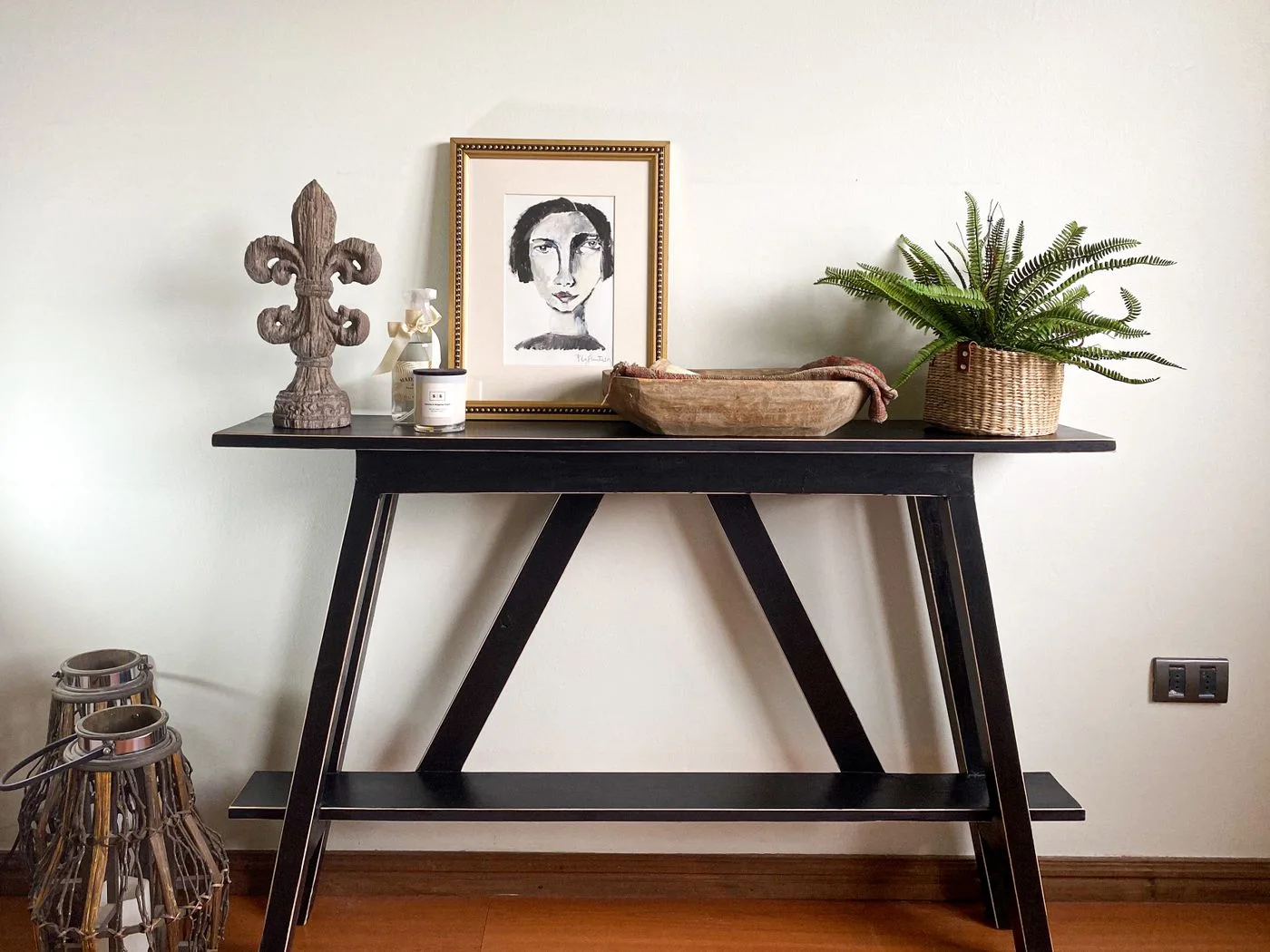
An arrangement of existing frames can make a small console feel personal without buying a new set. Start with the complete group and its relationship to the furniture, rather than hanging one piece and improvising around it. Paper templates give a useful reversible comparison. The aim is a clear display that suits normal viewing and leaves the console usable for its actual everyday purpose.
Record the full frame sizes
Measure outer dimensions, not only the printed images. Include any unusual projecting detail. Cut paper templates and label them so the plan remains easy to follow. A set of different frame depths or weights may need different fixing arrangements later. Do not assume a visually similar group can all use the same hook or adhesive product.
Choose one relationship to repeat
A common centre line, edge or spacing can give mixed frames continuity. You do not need every finish or size to match. Compare a tighter group that reads as one composition with a looser arrangement that lets individual pieces stand apart. Judge the whole console width and the empty space around the group before adding more prints merely to fill every gap.
View from the actual room positions
Try the templates with a safe suitable temporary method that will not damage the wall. Look from the doorway and normal seats. A display can appear balanced close up but feel detached from the furniture at a distance. Check existing lamps and objects too. The artwork should relate to the console without forcing every practical item off its top.
Check height in context
There is no one measurement that suits every ceiling, furniture height and viewing position. Compare the group with the console's width and the room's use. If it seems to float separately, test a different position before buying larger frames. Keep future wall fixing in mind and obtain permission where required in a rental. A reversible plan saves unnecessary holes and guesswork.
Use suitable fixing for each piece
Follow the fixing and frame guidance for the actual weight, wall type and construction, seeking competent help where needed. Do not rely on a decorative appearance to establish secure mounting. Leaning a frame is another option only where it can be positioned stably and safely. Keep heavy or fragile pieces away from unsuitable edges and household activity.
What if the group feels crowded?
Remove one frame temporarily and reassess spacing before purchasing another object to balance it. Rotation can keep favourite pieces visible without displaying every image at once. Clean frames by material-appropriate methods and protect prints from moisture and unsuitable conditions. A useful arrangement should remain meaningful and easy to live with, rather than become a permanent puzzle that grows every time a new print is found.
Related reading
Continue with The City Weekend Packing List That Leaves Room to Wander and A Practical Lighting Plan for a Small Room. These existing guides provide a broader starting point for the related wardrobe, home or planning decision.
Our approach: practical editorial guidance, without claims of hands-on product testing. How we make recommendations.





