Shopping note: retailer links in this guide are ordinary direct links. If a link becomes an affiliate link, it will be identified and we may earn a commission. Read our disclosure.
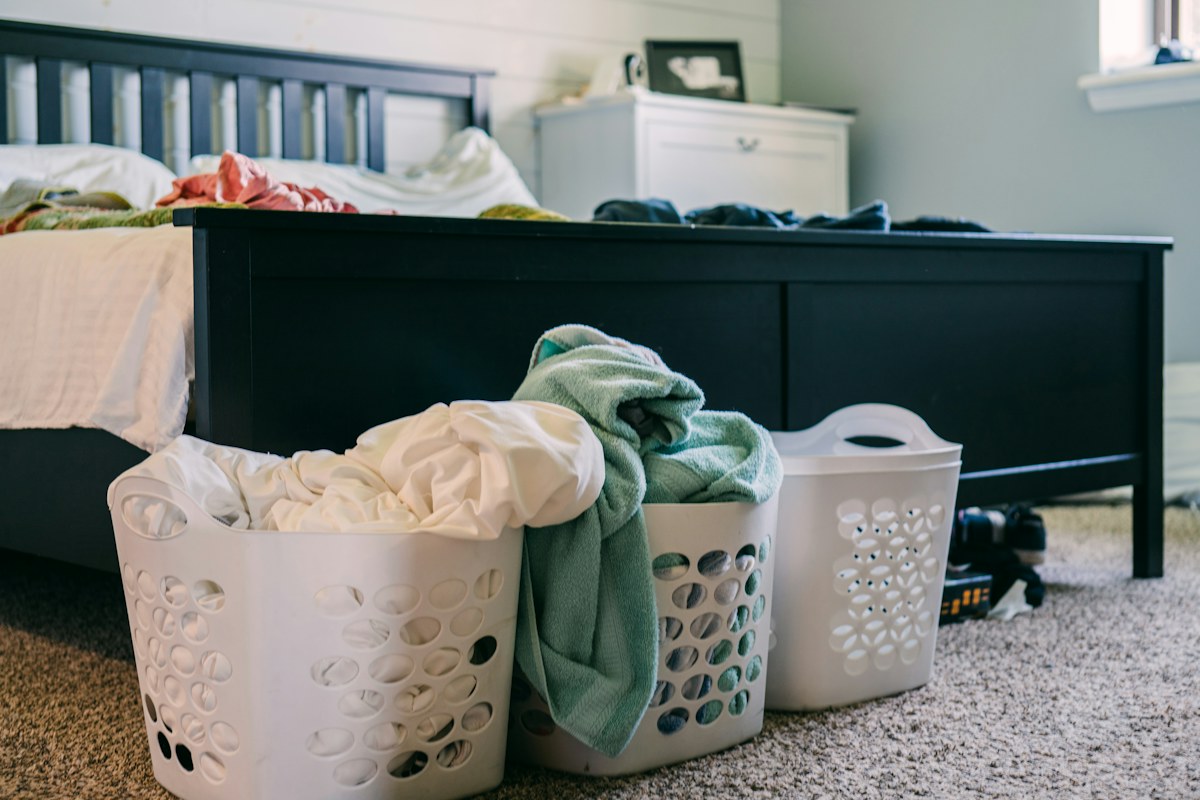
A basket of clean dry clothes can remain full because the destination is difficult to use. Before buying another basket, examine the final return step. The problem may be crowded drawers, unclear ownership or a rail without working space. A useful adjustment makes clothing accessible in its proper storage and leaves the container ready for the next load, rather than creating a permanent alternative wardrobe beside the bed.
Separate laundry stages
Keep items awaiting washing distinct from clean clothing and manage damp textiles appropriately. If a basket serves multiple roles, clean and dry it suitably between them. An empty appearance is not a complete readiness check. A consistent location or simple label may help when several people share the task. Avoid creating a complicated system that nobody can maintain through an ordinary week.
Find the group that remains
Take a typical dry load and put away the easy items first. Notice what stays in the basket. Name the specific obstacle: an overfilled sock drawer, inaccessible hanging space or no clear destination for one person's clothes. Solving that problem can be more useful than a general instruction to organise better. A larger container usually makes the delay less visible without removing it.
Make storage usable
Leave enough room to return clothes without forcing them into precise decorative folds. Follow garment and furniture guidance. Place everyday pieces where they can be reached and put back comfortably. Occasional items may need another suitable location. Do not transfer the whole problem into a drawer that is already full. The wardrobe should serve the actual collection and users rather than a photograph of its ideal arrangement.
Sort by destination when helpful
Use a suitable clean surface and keep the groups manageable. Returning one person's clothes or one category can be easier than tackling a large mixed pile. Keep care needs distinct and avoid letting perfect presentation delay storage. A simple appropriate fold or hanger choice is enough when it makes ordinary access easy. The method should fit the garment and available furniture.
Plan the whole sequence
Consider when washing, suitable drying and return can realistically happen. A smaller completed load can be more useful than a large one that waits in every available basket. Follow care labels and do not leave damp items compressed while waiting for space. The routine includes readiness for storage, not only the machine finishing. Adjust the timing around the stage that repeatedly stalls.
When is another basket justified?
When it has a clear role, suitable material and a manageable carrying route. It is less useful when it simply holds more unfinished returns. Review several loads after changing access or timing. The successful setup makes clean clothes easy to find where they belong, with fewer uncertain piles and less searching for something that has already been washed and is waiting just out of sight.
Related reading
A Wardrobe Care Routine That Fits an Ordinary Week, A Creative Office Wardrobe Without a Second Closet.
Our approach: practical editorial guidance, without claims of hands-on product testing. How we make recommendations.





