Shopping note: retailer links in this guide are ordinary direct links. If a link becomes an affiliate link, it will be identified and we may earn a commission. Read our disclosure.
A necklace with an intended adjustment can be easier to repeat when the useful setting remains understandable. Keep a modest note where it helps without replacing the maker's instructions. The aim is to preserve an actual outfit relationship, not turn a remembered chain position into a universal rule for every neckline.
Establish intended adjustability
Read the product information and identify the component designed to adjust. Do not infer a function from a trailing chain or similar-looking fastening alone. An unfamiliar part should remain a question until reliable guidance explains its role.
Check the component's condition and operate it as instructed. If it does not work properly, seek appropriate support before wearing. A different setting does not necessarily resolve a fastening issue that needs attention.
Use the actual outfit
Choose the top and base layers planned for the activity. Let the neckline settle naturally rather than pulling it to match the necklace. The useful setting belongs to the garment as ordinarily worn, not a temporary opening created for the photograph.
Keep other jewellery modest during the first comparison. One necklace relationship is easier to understand than several pieces adjusted simultaneously. Additional chains can be considered separately without making the initial note more complicated.
Compare settings appropriately
Follow the intended operation and handle the piece carefully in a suitable place. Avoid pulling at an unfamiliar closure or applying force to reach an imagined length. Product guidance remains central to the styling choice.
Move and sit normally once the necklace is worn. Notice whether it rests comfortably and remains manageable beside the neckline. A precise still position is not a promise that jewellery will remain unchanged through ordinary use.
Record only the useful detail
Use a clear private description of the actual component position where appropriate. Avoid inventing a numerical measurement whose method cannot be repeated. A modest note linked to the product and top can be enough.
Retain care and identity information separately. A setting note does not establish material, individual suitability or the correct treatment of the jewellery. Keep those questions with the actual instructions and appropriate advice.
Review before repeating
Check that the same necklace and garment are being used and that the product remains appropriately ready. A similar neckline or chain can create a different relationship. Update the note when the piece changes through an appropriate process.
Remove obsolete references if the necklace leaves or no longer serves that role. A useful adjustment note supports a specific repeat outfit without making dressing depend on a technical-looking rule. It keeps the original component understandable while allowing personal preference and ordinary movement to remain part of the choice.
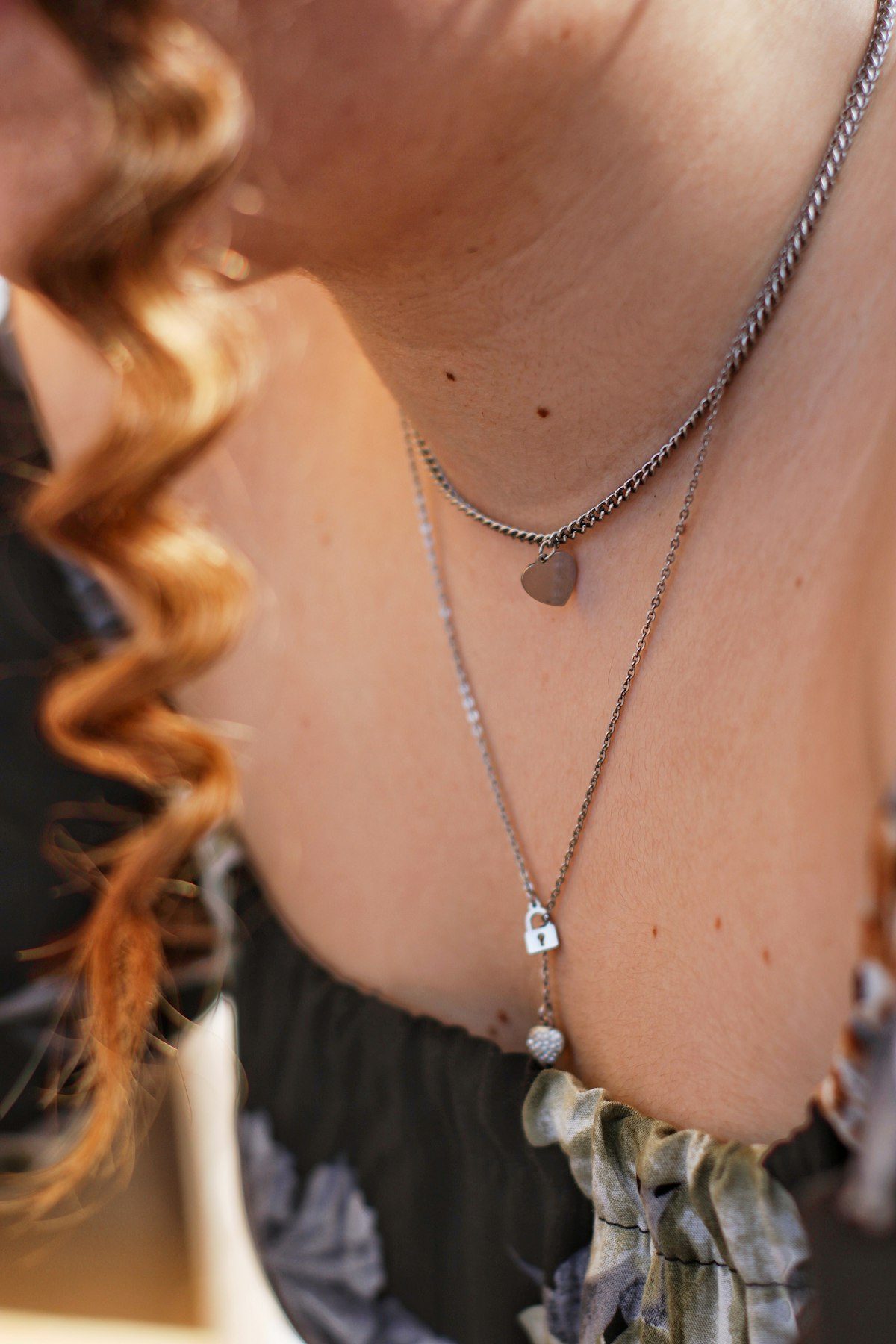
A note naming the blue top and the maker’s indicated attachment position preserves context more clearly than an unexplained number beside a jewellery photograph.
Related reading
A Necklace That Sits Comfortably with a Plain Top, Packing Accessories Worth Their Space.
Our approach: practical editorial guidance, without claims of hands-on product testing. How we make recommendations.





