Shopping note: retailer links in this guide are ordinary direct links. If a link becomes an affiliate link, it will be identified and we may earn a commission. Read our disclosure.
A bright coat can be the most memorable part of a weekday outfit and the part worn for the least time. Once indoors, the clothes beneath it take over. Build a red-coat combination from that practical starting point: one dark base you already understand, the bag needed for the day and the footwear appropriate to the actual plan. The coat adds a visible frame rather than requiring a second wardrobe around its colour.
Begin at the indoor destination
Set out the top and lower garment as though no coat were involved. A plain dark shirt with familiar trousers creates one kind of base; a dark knit and skirt creates another. Use actual pieces rather than an idealized all-black image that hides every difference in texture.
Check the neckline and waist arrangement together. If a belt or another detail is part of the normal indoor outfit, keep it in this first view. The base should not become an anonymous dark column whose unresolved choices are expected to disappear beneath outerwear.
Add the real workday objects
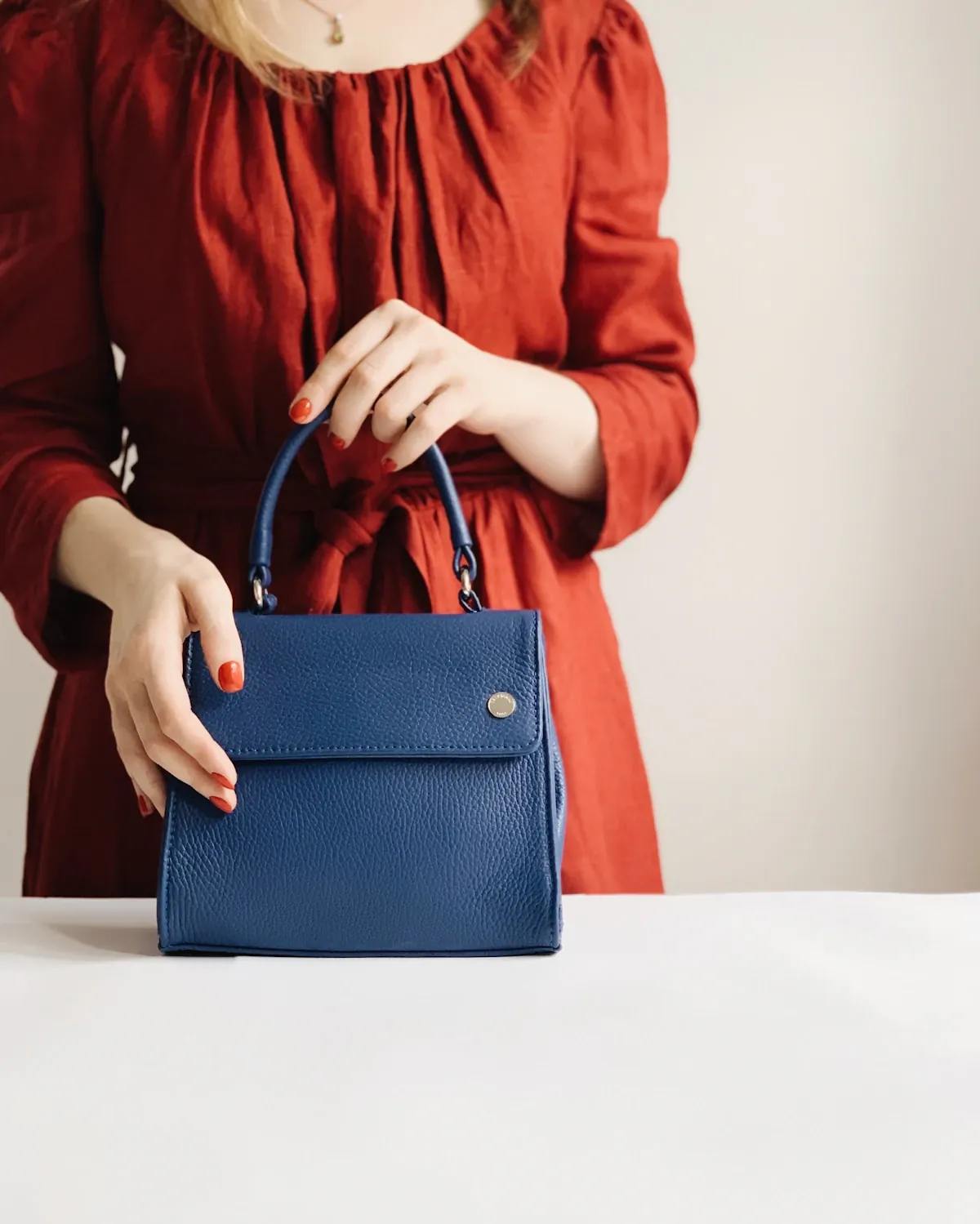
Bring the ordinary bag into the comparison with an appropriate load. Its practical job remains the same whether the coat is red or grey. A broad dark bag may connect to the base while a smaller quiet accessory produces another proportion; neither needs replacement merely to repeat red.
Use the shoes already suited to the day's activity. The photograph can show how their colour ends the silhouette, but it cannot establish comfort or suitability for another person's journey. Keep those questions attached to the actual pair.
Compare the two coat moments
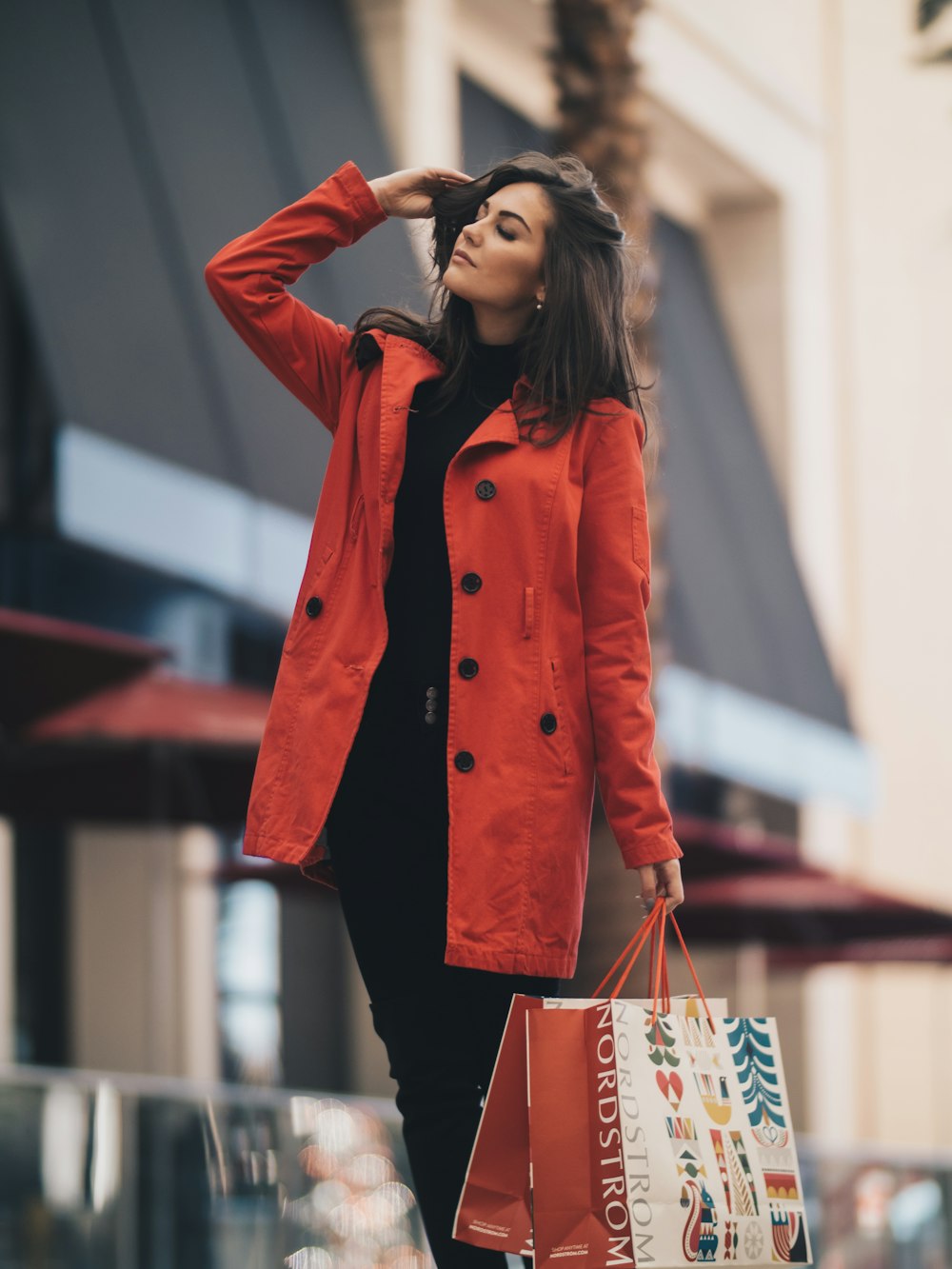
Wear the coat in its supported normal arrangement and notice how much dark fabric appears through the front. Then compare the indoor version after removal. These are two complete views of one day, not a finished outdoor outfit followed by an unfinished base.
A coat fastened for one part of the day may expose red across most of the torso. Open, it leaves a darker center and smaller red sections near the sleeves. Let the garment settle after movement rather than holding the fronts into a special shape for every image.
Keep the bright area proportionate
Before adding a red scarf or bag, look at what the coat already supplies. Its sleeves repeat the colour near the hands, and its front provides a large area above the lower garment. That may be sufficient repetition within the clothing itself.
If a suitable owned accessory interests you, compare it afterward as a separate option. One change makes its contribution clearer than adding several coordinated details at once. A matching theme can be enjoyable, but it is a preference rather than evidence that the simpler weekday version was incomplete.
Write down the actual base, bag and footwear with the coat's ordinary opening. If the red layer comes off early, the useful outfit still remains. That is the practical advantage of beginning with familiar dark clothes: the bright coat can contribute strongly without being responsible for every moment of the day.
Related reading
A Creative Office Wardrobe Without a Second Closet, Choose a Transitional Coat for the Layers Beneath It.
Our approach: practical editorial guidance, without claims of hands-on product testing. How we make recommendations.