Shopping note: retailer links in this guide are ordinary direct links. If a link becomes an affiliate link, it will be identified and we may earn a commission. Read our disclosure.
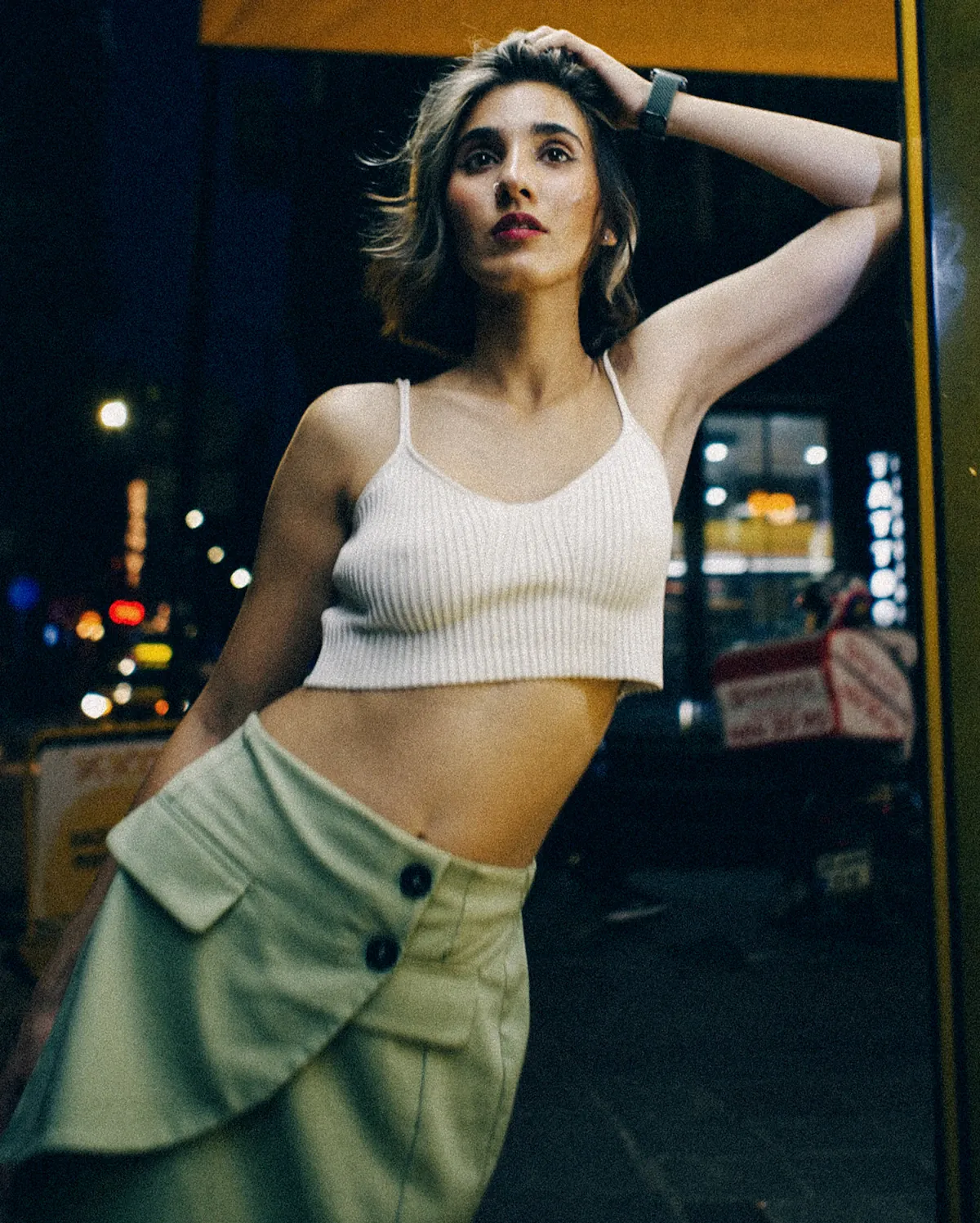
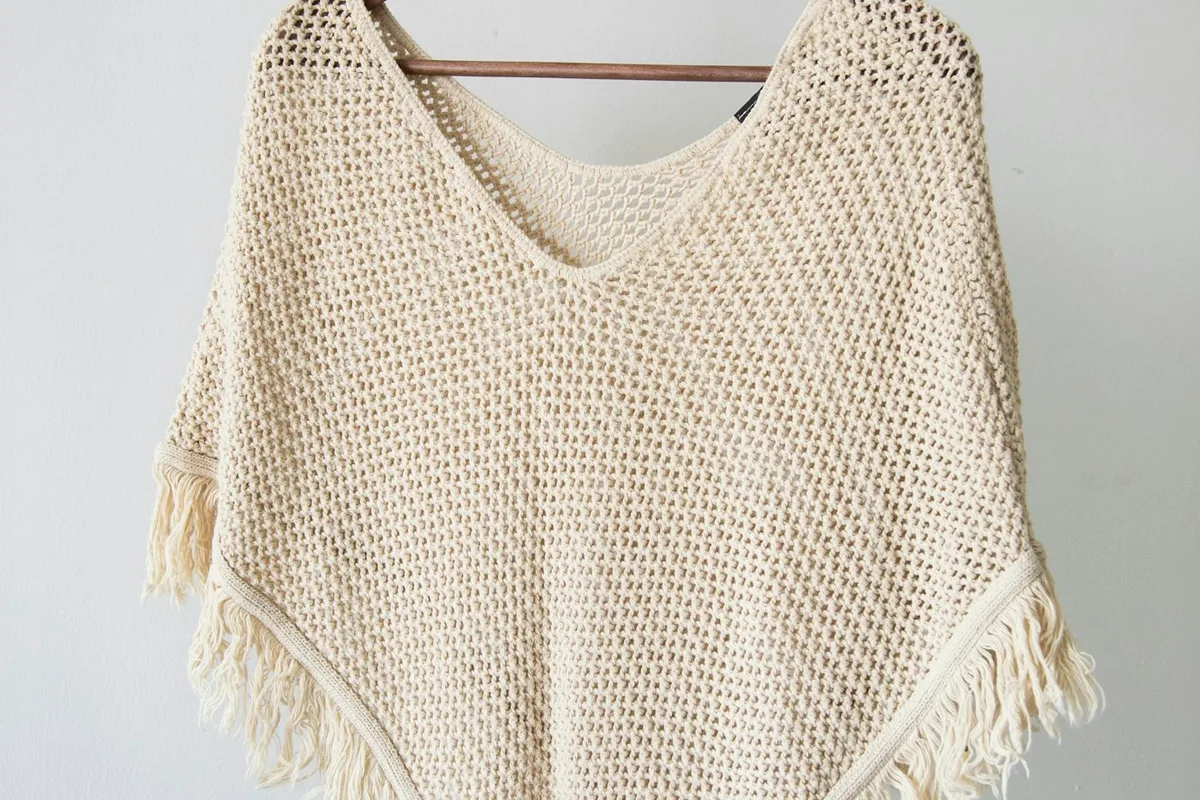
The spaces within an open-textured knit make the base colour visible across more than a neckline. A close-toned layer can quiet that pattern; a contrasting one emphasizes its repeated gaps. Use two suitable tops already owned to compare the difference. The aim is to understand a garment in the wardrobe, rather than decide from its hanger photograph that one particular new underlayer is essential.
Make the comparison fair
Choose base garments with similar ordinary shapes where possible. If one has a high neckline and the other a broad opening, note that the experiment changes shape as well as colour. There is no need to buy a matched pair just to make the test tidy.
Keep the lower garment and footwear steady. The open knit should also stay in its normal supported arrangement. A temporary fold or tuck held for a photo can alter the amount of base exposed without producing a repeatable outfit.
Read a related tone first
Try a suitable base whose colour is relatively close to the yarn. From a normal distance, the two surfaces may merge into a softer broad area. The pattern still exists, but its visual contrast becomes quieter.
Look at the neckline edge and any base hem below the knit. Even similar colours can create clear boundaries there. Decide whether those edges appeal to you instead of trying to conceal every sign that the outfit contains two garments.
Give contrast its own view
Change to the contrasting suitable top and let both garments settle. A darker base beneath pale yarn can make the open structure distinct across the torso. This is not automatically an error or a sign that a layer is showing too much; it may be the effect you prefer.
Use ordinary available light and regard photographs as memory aids. The actual garments provide the local colour reference. A screen image of pale texture cannot establish exact shade, fiber content or the care requirements of another item.
Check more than the front
Notice sleeves, shoulders and the lower overlap as well as the central pattern. A base sleeve may create a line at an arm opening; a longer hem adds another colour strip below the knit. Those areas contribute to the whole arrangement.
Sit and move normally, then review without restoring every fold. If one version needs repeated adjustment, preserve that practical difference. An appealing colour relationship should not make the actual garment's behaviour disappear from the choice.
Keep the base outfit understood without the knit in case the outer layer comes off. Then save the combinations with their real item identities and one reason for each: close-toned for a quieter area, contrasting for a clearer open pattern. One knit can have both roles through owned clothes, leaving another top purchase optional rather than the assumed answer to every visible gap.
Related reading
Buy Knitwear for Your Routine, Not Just the Fiber Label, An Open or Buttoned Cardigan with the Same Everyday Base.
Our approach: practical editorial guidance, without claims of hands-on product testing. How we make recommendations.