Shopping note: retailer links in this guide are ordinary direct links. If a link becomes an affiliate link, it will be identified and we may earn a commission. Read our disclosure.
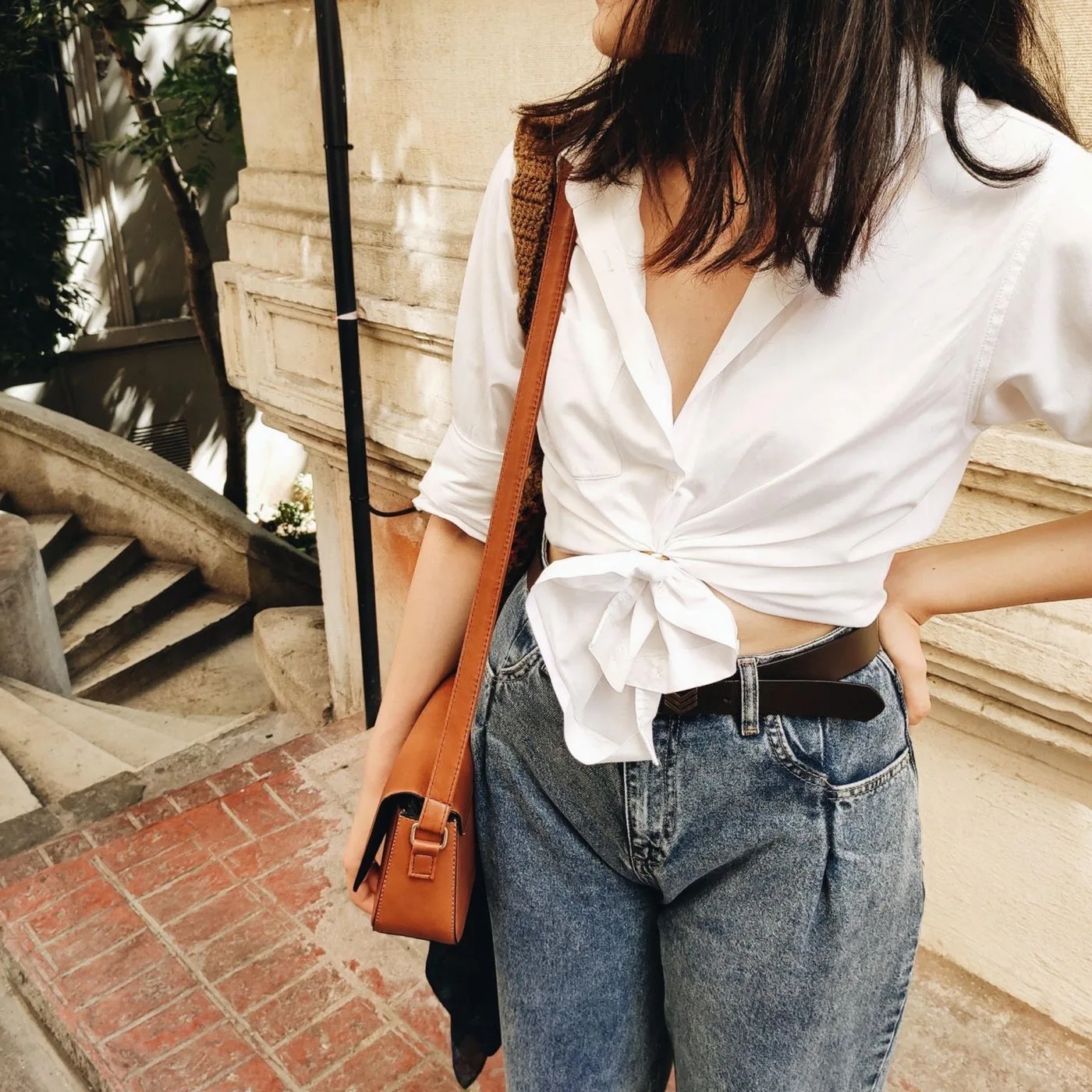
A shirt-front knot can change how a longer top meets the waistband without immediate alteration. It is not suitable for every fabric, condition or construction. Begin with the garment's guidance and the bottoms actually intended for use. The useful arrangement stays comfortable while sitting and reaching, rather than creating pressure or pulling on buttons simply to preserve a shorter outline at the front.
Check the garment first
Read composition and care information and inspect the lower fronts. Avoid twisting damaged, delicate or embellished areas without appropriate advice. An older shirt may need more caution than a robust contemporary one. Similar appearance does not establish identical tolerance for knotting. If construction makes the method unsuitable, compare an untucked, tucked or professionally altered option instead of forcing this styling change onto the garment.
Leave comfortable space at the waist
Fasten the trousers or skirt naturally and try the knot gently. Thick fabric can crowd a close waistband or press during sitting. Keep enough ease rather than tightening the tie to force a narrower silhouette. Compare another shirt or a different position where appropriate. The outfit should not require a special posture to make the knot feel acceptable.
Watch the fastening above
Use buttons as intended and check the placket after reaching and sitting. A knot should not drag the front into persistent tension. If gaps or neckline movement appear, loosen the arrangement and reassess. Avoid additional pins or improvised fastenings to hold together a pairing that does not fit. A reversible styling option should not become an unsupported structural repair.
Assess coverage in motion
Look at sides and back as well as the front. A longer back and tied front can be deliberate, but choose the effect rather than discovering it later. Check supporting layers according to your preferences. The indoor outfit should remain complete when a cardigan or jacket comes off. Do not depend on another layer permanently covering a knot arrangement you otherwise dislike wearing.
Try the accessories
Include any belt and the bag at a realistic load. A large buckle can compete for the same space, while a strap may pull the shirt unevenly. Removing one detail can make the outfit easier to manage. Exact colour coordination is optional. Familiar bottoms and suitable shoes help keep the shirt variation clear instead of changing every part of the outfit at once.
What happens to creases afterwards?
Untie gently and follow the garment's care instructions. Folding and twisting can leave different effects in different materials, so do not assume one heat treatment is suitable. If upkeep or strain makes the method impractical, choose another silhouette. The successful knot is an optional change for a suitable shirt, allowing familiar pieces to meet comfortably without turning every long top into a problem that must be tied away.
Related reading
How to Choose a White Shirt You Will Actually Wear, A Practical Guide to Buying Straight-Leg Jeans.
Our approach: practical editorial guidance, without claims of hands-on product testing. How we make recommendations.





