Shopping note: retailer links in this guide are ordinary direct links. If a link becomes an affiliate link, it will be identified and we may earn a commission. Read our disclosure.
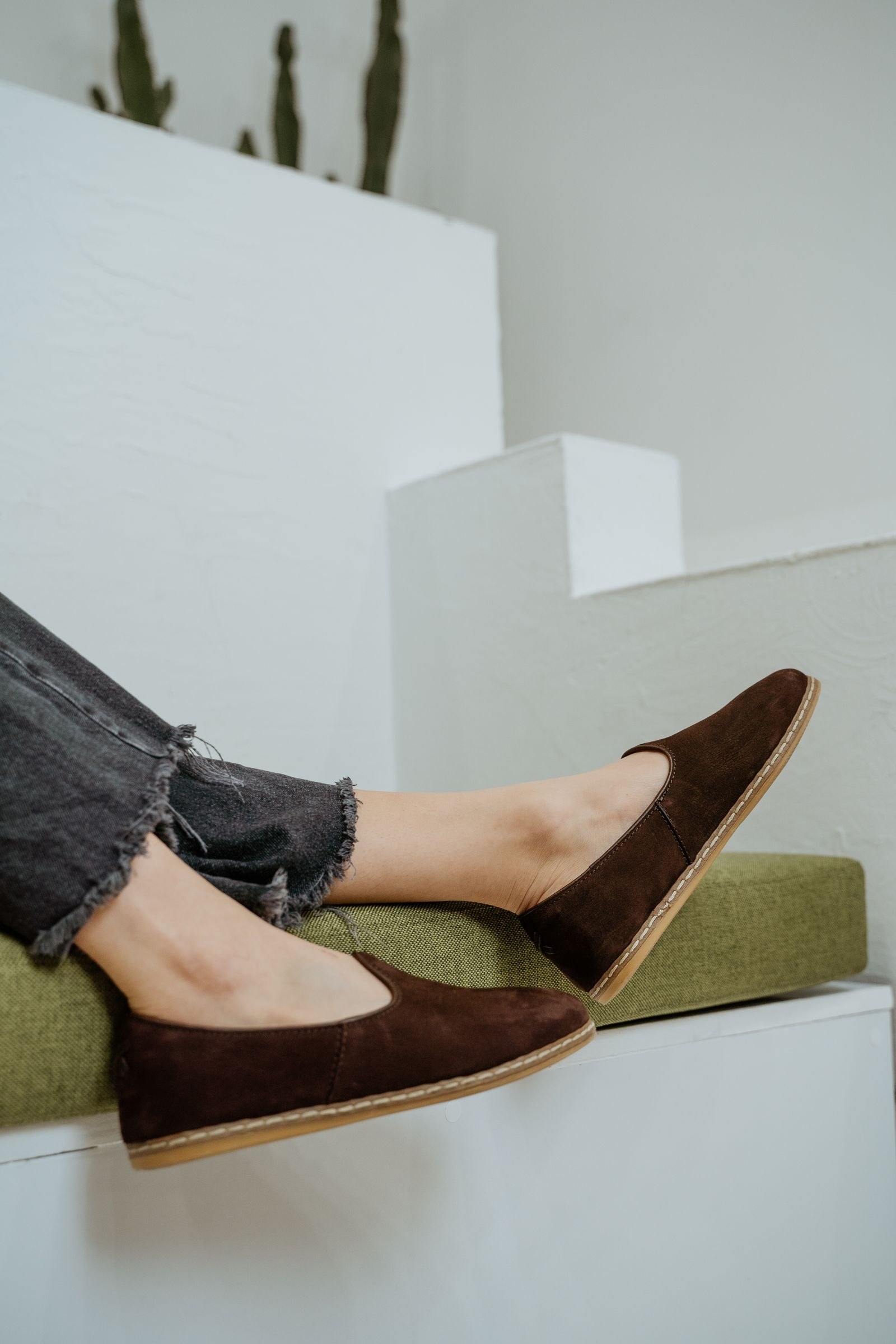
An outfit's smallest boundary can look disproportionately important in a close photograph. Brown slip-ons beneath dark jeans may show an uneven denim edge, a pale ankle area and the shoe opening all within one small frame. Step back before deciding the combination needs correcting. The useful question is how that join appears in ordinary wear, alongside the larger shapes of the actual outfit.
Begin with the jeans as they are
Identify the garment's known design and condition. An intentionally uneven edge and an unresolved hem concern are different things. Keep care or alteration questions separate rather than assuming every loose-looking strand belongs to the style.
This comparison does not require cutting or pulling fabric. The current clothes can be observed without changing them. If an alteration is genuinely wanted, keep that as its own considered task with appropriate information.
See the shoe opening clearly
Use familiar suitable footwear and notice how much of the upper remains visible. A longer hem may cover most of the opening, while another pair of jeans reveals it fully. Colour alone does not explain that difference in shape.
Keep the practical role of the shoes clear. A neat brown outline in an image cannot establish fit, comfort or suitability for the actual day. The appearance review contributes one part of understanding the pair, not a replacement for its ordinary requirements.
Let movement supply the second view
Stand normally, then sit appropriately and allow the denim to settle. More shoe or ankle may appear in the seated version. This is useful context for a day that contains both positions rather than a reason to select only one flattering instant.
If taking a reference, include a view without lifting the trouser leg to display the footwear. A posed detail can remain a separate photograph, but it should not become the only record of how the garments actually meet.
Restore the rest of the outfit
Add the familiar top and bag and look from a normal distance. A boundary that seemed busy in close-up may become a modest texture beneath a broad plain area. Another existing texture above the waist is not automatically incompatible simply because both are visible nearby on a screen.
Compare a suitable owned alternative shoe only after this full view. Keep the clothes steady and name the difference: more visible opening, a darker endpoint or another upper shape. A vague verdict such as smarter does not tell you what actually changed.
Save the real jeans and shoe identities with the ordinary hem arrangement. The point of the note is a repeatable relationship, not a flawless close-up. Familiar footwear can remain useful when the whole outfit is understood, leaving another purchase as a response to a real need rather than a magnified detail that occupies very little of the actual day.
Related reading
A Practical Guide to Buying Straight-Leg Jeans, Keep a Shoe Comparison Tied to the Actual Pair.
Our approach: practical editorial guidance, without claims of hands-on product testing. How we make recommendations.