Shopping note: retailer links in this guide are ordinary direct links. If a link becomes an affiliate link, it will be identified and we may earn a commission. Read our disclosure.
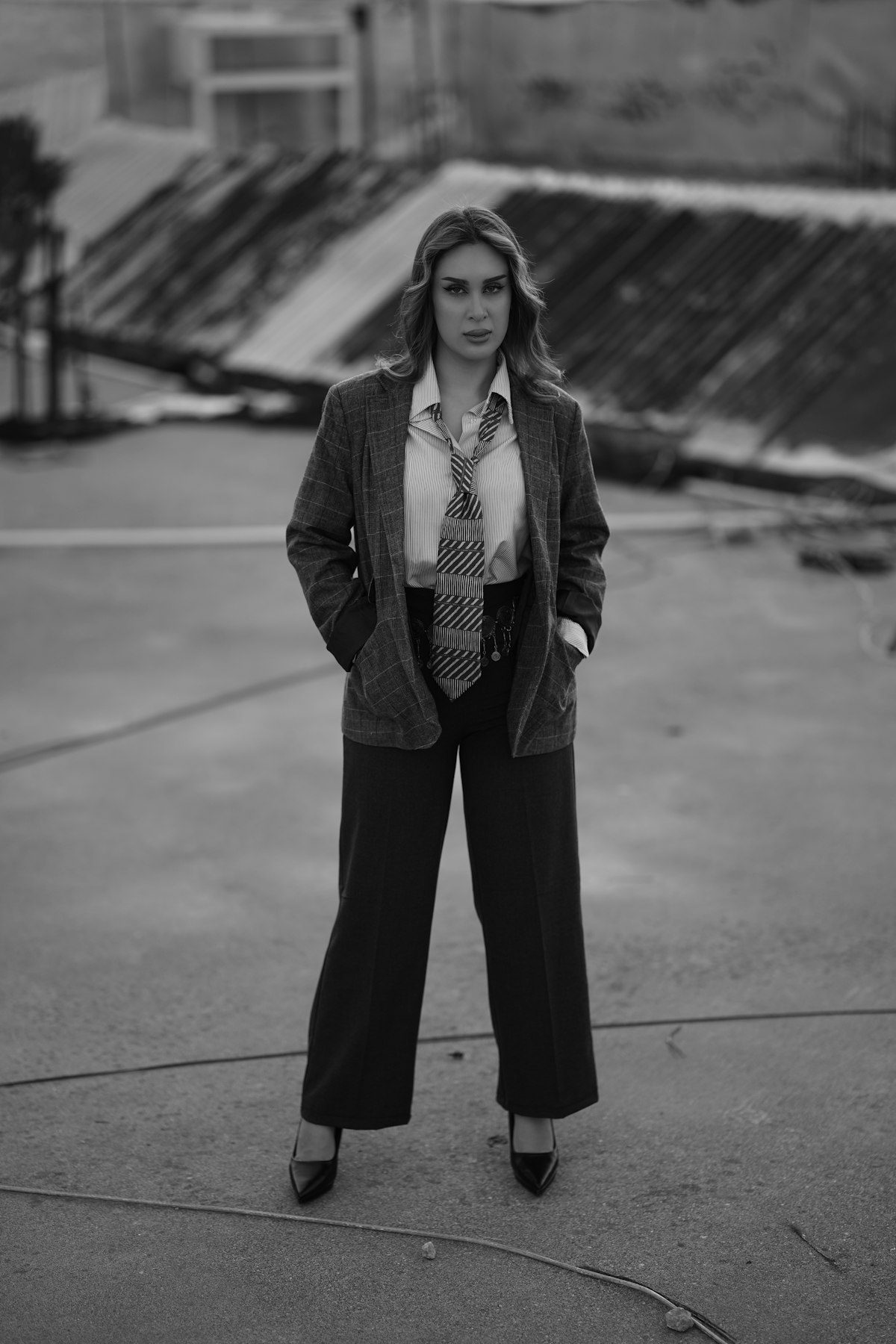
A private black-and-white outfit image can clarify shape and proportion, but it leaves colour information behind. Keep that limitation clear when saving a wardrobe reference. The useful photograph supports a specific clothing decision rather than becoming a complete record of details the image does not preserve.
Choose the reference purpose
Decide whether you want to remember the silhouette, a layer relationship or another visible arrangement. A specific purpose makes the image easier to use later. Do not collect several nearly identical frames simply because the monochrome effect looks polished.
Begin with an outfit already assessed appropriately through ordinary movement. An attractive still image is not evidence that the clothing serves a particular activity. Keep the practical result separate from the photograph used to remember it.
Preserve the actual garment identity
Name the pieces clearly in a private note where useful. A dark blazer in an image may be difficult to distinguish from another once colour is absent. Keep the record recognisable without including unnecessary personal information.
Retain relevant product and care guidance separately. A monochrome image cannot establish material, intended use or a care routine. The reference supports an outfit idea while leaving those questions with the actual instructions.
Keep colour out of the conclusion
Do not infer that two garments match in colour because they appear similar in the image. Different shades can produce similar tones in a black-and-white representation. Review the actual pieces or reliable product information when colour matters.
If a colour relationship is part of what worked, preserve it in a separate appropriate record. The reference does not need to do every job at once. A clear small set of complementary information is more useful than confidence borrowed from one visually appealing photograph.
Keep the image practical and private
Use a view that shows the relevant relationship without forcing the outfit into a pose never used ordinarily. Avoid editing that alters the shape you intend to remember. A polished image can become less useful if it no longer represents the actual garments.
Store the reference according to your preferences and leave unrelated private details out of the background where possible. There is no need to publish an outfit note for it to support future dressing. A text description can be enough where the practical detail is not mainly visual.
Review before repeating
Check that the actual pieces still serve the next activity and remain appropriately ready for use. A successful old outfit does not replace current product, setting or care decisions. Update the reference when a garment changes or leaves the wardrobe.
Keep only the image and note that remain useful. A considered monochrome reference saves a clear visual relationship while acknowledging what it cannot show. It helps familiar clothing remain understandable without letting a photographic effect become evidence about colour, material or suitability.
Related reading
All-Black Clothes with Different Textures, A Wardrobe Care Routine That Fits an Ordinary Week.
Our approach: practical editorial guidance, without claims of hands-on product testing. How we make recommendations.





